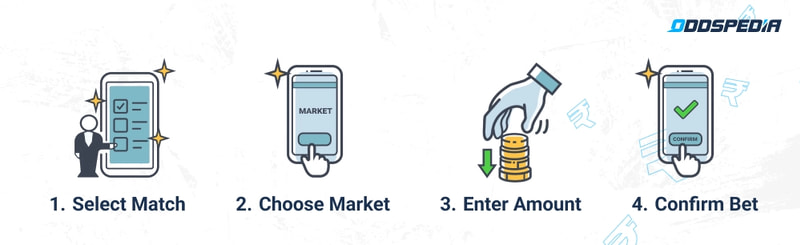
The popularity of kabaddi has grown in recent years, and understanding how to bet on kabaddi is crucial if you’re looking to prepare for your next wagers.
It’s never a bad time to learn the best kabaddi betting strategies and tips. Take what you learn here to markets at the best betting sites in India.
What is kabaddi? A quick introduction
Kabaddi is a combat sport played between two teams of seven players. It is a traditional Asian game widely played in India and Bangladesh. Teams play this sport for 40 minutes with a five-minute break. Opponents raid the opposite court to score points.
Basic gameplay: raiders vs. defenders
The raider enters the opposite half of the court to touch defenders and must return without being tackled. Tag the opposite side’s player while shouting “kabaddi, kabaddi.” The raider needs to be in the defender’s court until they score.
Defenders only earn the point when they stop the raider. The defending team is also known as anti. They aim to catch the raider and prevent them from scoring any points.
Scoring system and how to win
I believe scoring is the most interesting part of a kabaddi match. A raider needs to tag as many players from the opposite team as possible. Points are only earned if the raider manages to return to his side before the time is up.
Smart strategic play, scoring more runs during the allotted time, and effective raiding make winning possible. Defenders playing a ‘super tackle’ move can score more points.
Match and raid duration
The match lasts for 40 minutes with a five-minute break given to the players. If it’s a tie, players will get an extra five minutes. The match duration is set to 20-5-20.
The raid duration for the kabaddi match is 30 seconds. Within this time, a raider needs to enter the opponent’s court, tag the opponent, and return to their court. Chanting ‘kabaddi’ during this period is mandatory.
Teams, field and penalties
Two teams participate in kabaddi with a total of 12 players on each side. Only seven players from the team play in the defensive and raiding positions. One player at a time from the raiding team plays out.
The professional men’s kabaddi field has a layout of 13 metres in length and 10 metres in width. However, women’s teams play on a 12-metre by 8-metre field. Baulk and bonus lines play a role in scoring points.
Penalties happen when:
The word ‘kabaddi’ is not used.
A raider chants the word ‘kabaddi’ late after crossing the centre line.
A raider team has to go in a sequence for raiding. Moving out of order means defenders get the point.
Two raiders enter the defender’s side.
If a defender side enters the opponent’s court before their turn to raid.
Player removal and reviving teammates
Player removal happens in a few cases:
Tagged players need to leave.
Stepping out of the boundary line of the court.
A captured raider who cannot return to his/her half of the court.
Team removes the third raider if there are three unsuccessful raids in the game.
To revive a teammate, a team must score a point. A player will only get revived after the successful round of raiding or defending ends.
Coin toss
A coin toss is done to determine which team will raid first. The winner of the toss decides whether they want to raid or defend.
PKL: a brief overview of the rules, teams and history
Explore with me the exciting side of the Pro Kabaddi League (PKL), and get to know the rules for successful PKL betting!
PKL was established in 2014 by Mashal Sports Pvt. Ltd., and later Disney Star took over. Inspired by the IPL league, it innovated the kabaddi sport.
The Pro Kabaddi League’s top teams are:
Dabang Delhi K.C.
Jaipur Pink Panthers
Puneri Paltan
Tamil Thalaivas
U Mumba
UP Yoddhas
Bengal Warriorz
Bengaluru Bulls
Gujarat Giants
Haryana Steelers
Patna Pirates
Telugu Titans
PKL aims to make this game popular at an international level. Therefore, the league introduced changes to its rules.
A ‘Do-or-Die raid’ after two unsuccessful raids. Players have to score a point to remain in the game.
If three or fewer players are left on the defending team, the tackle will be considered a ‘super tackle’. This will help them score two points instead of one.
Other kabaddi rules remain the same, as discussed above.
Common kabaddi betting markets
Familiarise yourself with the kabaddi betting markets to make informed decisions on kabaddi betting odds. I have shared a few popular ones below.
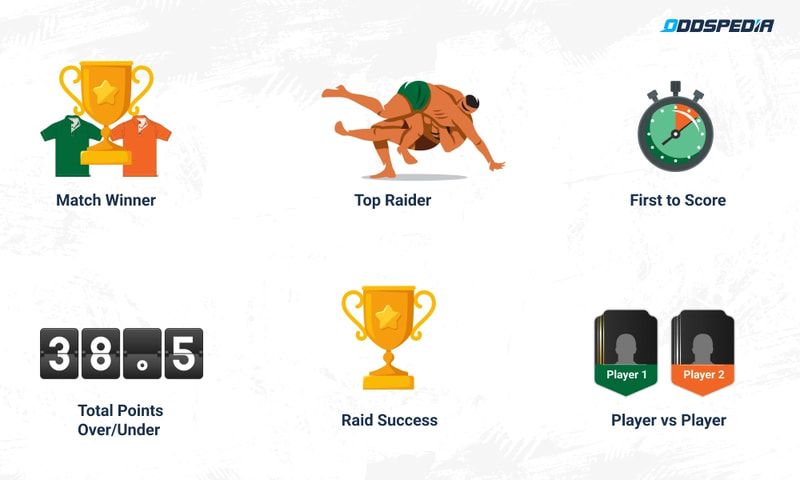
Outright winner
It is a most basic bet. You have to bet on which team will be the winner. You may also bet on the top three positions, season winner, etc. I check out the betting odds before making my move.
Match winner
You are simply betting on which team will be the winner after 40 minutes. If it’s a draw, you can consider the match winner in that condition. This market is hard to predict, so odds are generous.
Total points: over/under
Let me explain this with an example. The market may be set over/under 80 points. If you think the total score of both teams will be less than 80 points, bet ‘under’. However, if you think the score will be more than 80 points, bet the ‘over’. You can even bet on individual team points, the fouls, raids, defending scores, etc.
Top raider, top defender
Wager on individual players to score the most raid points or the most defensive points. It’s similar to the top goalscorer bet in football or the top fielder bet in cricket.
First raid outcome
Predict when the first raid will come in the kabaddi game. There is an over/under line set by bookmakers for odds in this betting market.
Winning margin
This is the bet type I use most frequently and specifically recommend. You need not care who wins. Guess the margin of victory in the game, such as 1-10 for kabaddi tournaments.
More kabaddi betting markets
I recommend favourite/underdog betting. You can wager on your favourite team or check out the performance of a new team. Go for half betting by determining which team will win the match over the first 20 minutes of the tournament.
Live betting lets you wager on the odds of your choice in real-time. To add fun to betting, choose prop bets by betting on your favourite player, first team to score, last team to score, etc.
Kabaddi betting tips and strategies
There are some key kabaddi betting strategies to consider as you get started.
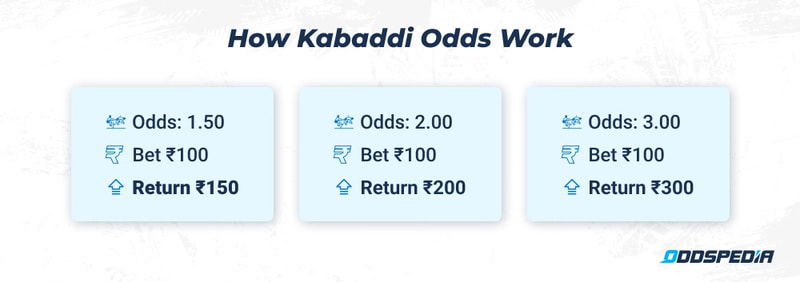
Place bets on higher odds: It’s a key to doubling your money. Check the odds on sports betting sites or apps before making a move. Claim one of the best betting offers in India before you get started.
Set betting limits: Bet responsibly to avoid gambling addiction. Set your bankroll and never play over your limit. It’s smart to review and use responsible gambling tools.
Understand the rules: Learn everything you can about kabaddi’s format, point system, and team rotation to help maximise your potential.
Kabaddi betting apps and sites
If you are an avid bettor like me, Parimatch offers great coverage for kabaddi events. You can also get a 700% deposit match bonus and two free bets with the Parimatch promo code for India. There are ample live betting opportunities to choose from as well.
Meanwhile, the Stake India bonus code provides an exciting welcome offer, 1.2x VIP progression, live PKL betting, and an outright betting market with the best odds.
With a postgraduate degree in English Literature and a Bachelor’s in Commerce, Neha has over nine years of experience covering the online sports betting industry. She has written for numerous national and international sports betting and iGaming websites, gaining wide exposure in her career.
Neha has combined her love for sports and writing, providing quality betting advice, bonus reviews, and easy-to-read guides. Her publications regularly include educational insights on a variety of topics across sports betting, IPL, basketball, badminton, tennis, and other sports.
She is a fan of tennis and badminton, and loves watching the Olympics and Wimbledon. Her articles include odds reviews, betting bonus overviews, casino reviews, and more. Neha herself plays badminton and excelled at the university level. When she is not writing, Neha is exploring new cities, going for solo treks, meeting new people, trying local cuisines, listening to Phonk music, and playing basketball with her pooch, Zephi. The “good boy” is a “pawsome dribbler.”
Learn how to watch live sports on Stake, access eligible live streams, and follow in-play odds, markets, and scores as the action unfolds. We rechecked Stake’s stream requirements, supported sports and regional limits.
When considering Betway vs. bet365, there are plenty of similarities to note. We compare these bookmakers’ odds value, betting markets, casinos, and more.
We use cookies to ensure you get the best experience on our website. You can manage your preferences and find out more by clicking the ‘Customise’ button below.