Kalshi is a legal prediction market platform regulated by the Commodity Futures Trading Commission (CFTC). Players can buy and sell event contracts with “yes” or “no” binary options for real-world events in politics, economics, pop culture, and sports.
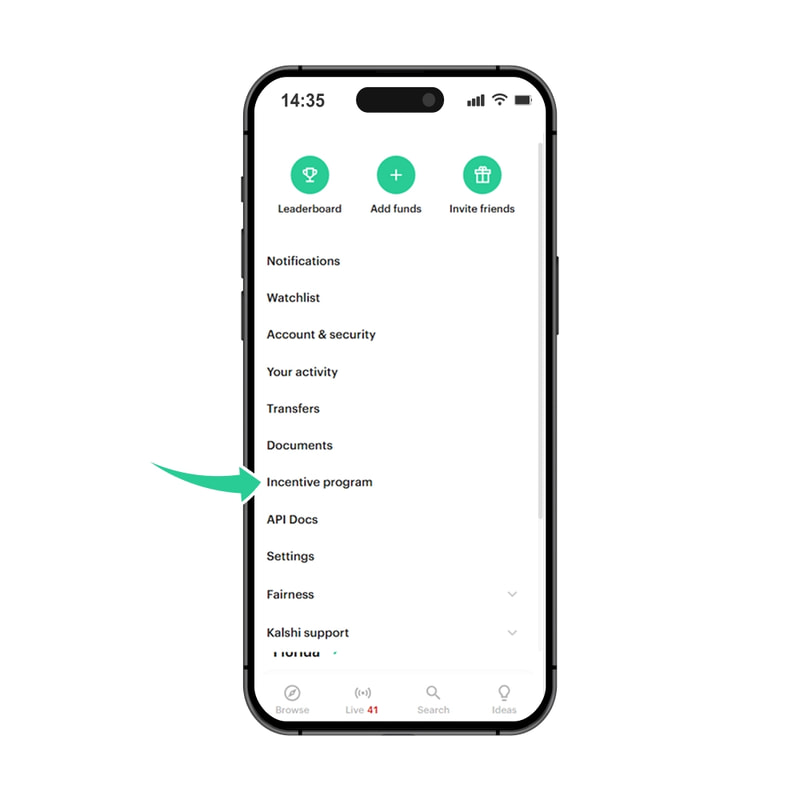
The Kalshi Volume Incentive Program was introduced in September 2025. As part of the program, users can earn cash bonuses based on their share of total trading volume in a given period.
For a full look at the platform beyond the Volume Incentive Program, read our Kalshi review and Kalshi promo code article. You can also see how it stacks up with Polymarket in our Kalshi vs. Polymarket comparison.
What is the Kalshi Volume Incentive Program?
Prices for event contracts on Kalshi range from $0.01 to $0.99. These represent the cost of a single share and the probability of an event occurring. A contract with shares trading at $0.70 implies a 70 percent chance of success based on user wagering activity.
Users can choose to hold their contracts until the settlement dates or sell their positions at any time for short-term gains or to mitigate losses.
Because Kalshi makes its money from transaction fees, Kalshi trading incentives like the Volume Incentive Program are essential to its financial wellbeing. The program also encourages increased user trading activity, which in turns improves liquidity and pricing efficiency.
As a reward for their trading activity relative to other users in select markets, players can earn a share of a prize pool based on their percentage of total volume.
How the Kalshi Volume Incentive Program Works
While all markets are potentially eligible, only some qualify for the Kalshi rewards program. The typical Kalshi cashback trading period lasts up to 31 days, after which players earn a portion of the reward pool based on proportional trading volume.
Reward pool totals and length of time remaining are displayed clearly on market pages.
Key Rules and Conditions of the Kalshi Volume Incentive Program
There are a few other things to consider for the Kalshi Volume Incentive Program. In addition to the 31-day maximum window for reward periods, there’s a maximum earnings cap per contract traded of $0.005. So, the maximum payout you can earn on trading 1,000 contracts is $5 (1,000 x $0.005).
Moreover, contracts must be priced between $0.03 and $0.97 to qualify for the Kalshi rewards program.
Who Can Participate in the Kalshi Volume Incentive Program?
Although Kalshi is federally regulated in the US, its legal status is in question in some states. Recently, a District Court judge in Nevada granted a temporary restraining order against the company, ruling that Kalshi’s event contracts “facilitate unlicensed gambling.” There have also been challenges in Arizona.
Kalshi also announced in October 2025 that it had expanded to 140 countries, but the Volume Incentive Program is not active for international users. Check out our “Where is Kalshi legal?” guide to see if the platform is available in your locale.
Kalshi affiliates and their employees, Futures Commision Merchants (FCM) and their customers, and market makers with existing agreements are also not eligible for rewards.
Is the Kalshi Volume Incentive Program Worth It?
The Kalshi Volume Incentive Program is a nice addition for high-volume traders, offering a passive means to earn cash while participating in – and informing – prediction markets. If you use the platform like a day trader, regularly buying and flipping contracts for short-term gains, you can earn a decent amount in some markets.
However, Kalshi cashback rewards are capped at $0.005 per contract traded, which can seriously limit earnings potential. This also makes the program somewhat obsolete for casual users, who really wouldn’t benefit much under the current rewards structure.
Sam brings years of hands-on journalism experience, as well as a passion for sports and sports betting, to his role as a Sports Betting Expert at Oddspedia. Sam began his sports and journalism career straight out of university, saying his motto in life is to do what he loves, and write home about it.
His career in the betting world is a mix of personal interest, professional curiosity, and a constant pursuit of the next adrenaline rush. As a diehard fan of the Minnesota Vikings when it comes to football, and Manchester United in soccer, Sam doesn’t just write about his teams, he backs them up with bets (mostly same-game parlays, which he says get him involved in all aspects of the game, not just one part).
Sam’s deep understanding of both the technical and strategic sides of sports betting is reflected in his writing. Whether he’s analyzing betting markets, dissecting odds, or offering his take on upcoming games, Sam combines insider knowledge with a fan’s perspective.
As an expert bettor and passionate fan of teams on both sides of the Atlantic, Sam brings his hands-on experience and knowledge to Oddspedia, playing a key role in content development, fact-checking, and ensuring that all information is clear, accurate, and useful for bettors around the world.
Learn how to watch live sports on Stake, access eligible live streams, and follow in-play odds, markets, and scores as the action unfolds. We rechecked Stake’s stream requirements, supported sports and regional limits.
When considering Betway vs. bet365, there are plenty of similarities to note. We compare these bookmakers’ odds value, betting markets, casinos, and more.
We use cookies to ensure you get the best experience on our website. You can manage your preferences and find out more by clicking the ‘Customise’ button below.