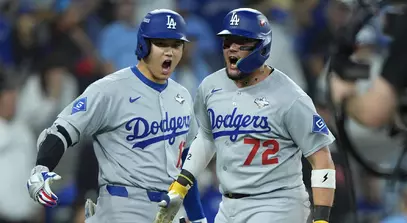
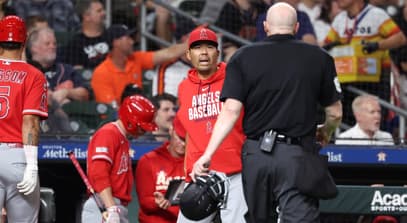
Baseball, a sport steeped in tradition and beloved across the United States, offers a great afternoon of excitement when the sun is shining and a lot of betting opportunities.
While the fundamental principles remain the same, significant differences exist between NCAA baseball and Major League Baseball, shaping how the game is played.
"With differences in play, MLB games last around 2 hr 30 minutes while they sometimes exceed 3 hrs 15 minutes in college baseball..."
For avid fans and bettors, understanding these differences is key to gaining an edge in predictions.
Let’s dive into the major differences between college and professional baseball and their impact on the game’s dynamics and the betting landscape.
The Difference Between MLB and College Baseball Rules
1. Pitch Counts
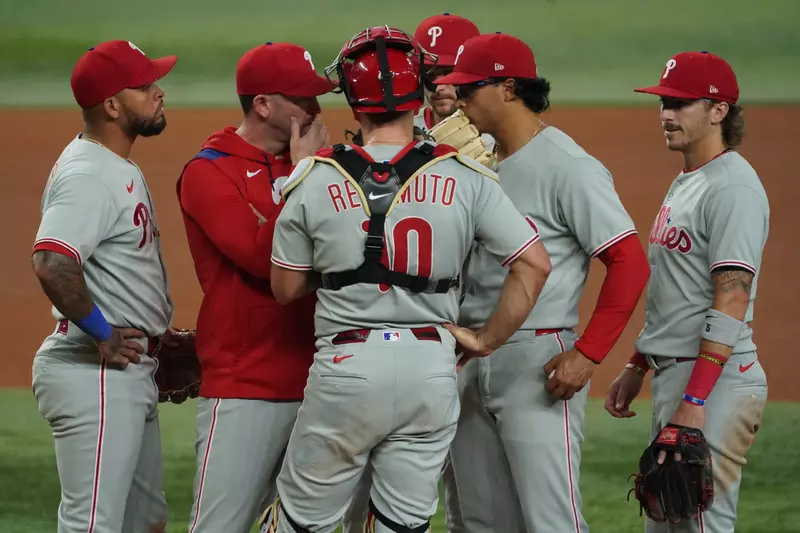
In MLB, while not explicitly defined in the rulebook, a strong emphasis is placed on managing pitcher workload, often guided by programs like Pitch Smart.
This typically results in starting pitchers throwing fewer innings, often around 90-100 pitches for a quality start of six innings, leading to greater reliance on the bullpen.
For viewers, this means more pitching changes and strategic matchups.
Bettors need to consider bullpen depth and manager tendencies for pitcher-specific wagers.
NCAA baseball rules do not specify pitch count limits. College starters might pitch deeper into games, potentially showcasing their endurance. For bettors, starter stamina could be a more significant factor than bullpen strength in NCAA games.
MLB Rule 5.10(l) and 5.10(m) limit mound visits to four per nine innings (plus one in extras) without a pitching change, with a second visit to the same pitcher in an inning requiring removal.
This aims to speed up the game. Viewers experience fewer interruptions, and bettors should note how these limits might force managers to leave struggling pitchers in longer.
NCAA rules allow six defensive charged conferences per game, including three “free trips” where the pitcher isn’t removed, plus one extra free trip in extra innings.
A second visit to the same pitcher in an inning or a third overall after the free trips necessitates removal.
This slightly more lenient approach might lead to more coaching interaction in college games, making pitching change predictions for bettors potentially less straightforward.
3. Designated Hitter
MLB Rule 5.11 mandates the use of a universal Designated Hitter. This generally leads to higher-scoring games, impacting over/under bets for bettors.
NCAA Rule 7-2 provides that a team is not required to have a DH; if used, the starting pitcher can be the DH (P/DH).
This optional nature allows for more varied offensive strategies in college games, and bettors need to consider whether a team is using a DH and, if not, the hitting ability of their pitcher.
MLB Rule 3.02 specifies that bats must be one-piece solid wood with strict size limitations. This contributes to the traditional feel of the game.
For bettors, offensive power analysis focuses on hitter talent.
NCAA Rule 1-12 permits both wood and non-wood (composite) bats that meet specific regulations.
The allowance of composite bats can lead to higher offensive numbers in college baseball, which bettors should consider when wagering on run totals and home runs.
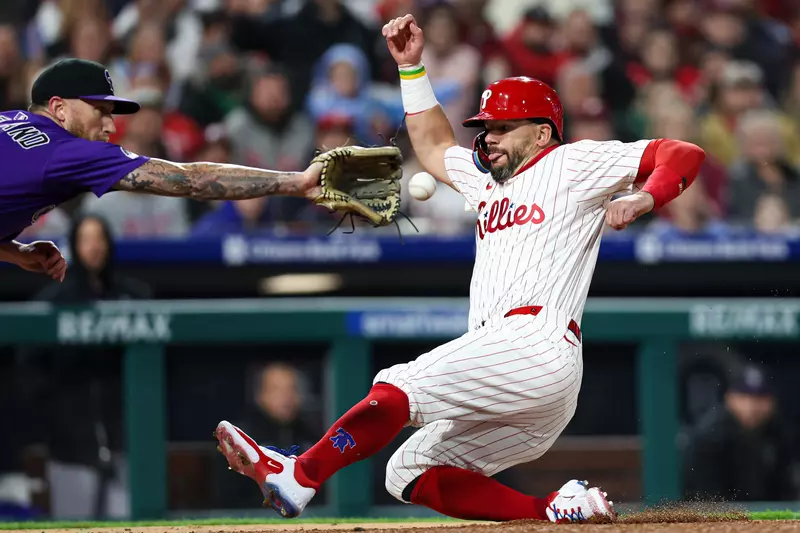
MLB Rules 5.06 and 6.01 require a “bona fide slide” to break up a double play at second base, prioritizing player safety.
NCAA Rule 8, Section 4 has a stricter “force-play-slide rule” requiring a direct slide into the base on force plays (except at first for the batter-runner); illegal slides can result in both the runner and batter being out.
This stricter rule at the college level might make successful double plays more likely in NCAA games for bettors to consider.
6. Field Dimensions
MLB Rule 2.01 provides general guidelines, but actual dimensions vary across ballparks, influencing offensive output (park factors).
This can lead to peculiarities like Fenway Park, home of the Boston Red Sox which has both the longest and shortest distances from home plate to the outfield fence in professional baseball (420 feet and 302 feet respectively).
Bettors must consider these individual park factors as they can hamper or help certain players’ performances, and they will be considered when MLB odds are set.
NCAA Rule 1-2 recommends more standardized outfield fence distances. This standardization means park factors are generally less critical for NCAA betting.
7. Roster Size and Eligibility
MLB has an active roster of 26 players for most of the season (28 in September), all of whom must be on the 40-man roster.
This provides roster consistency for fans and enables bettors to build up their own information on players to make predictions.
NCAA roster sizes vary by division and conference, often tied to scholarship limits, and eligibility is governed by broader NCAA rules. This can make obtaining comprehensive roster information more challenging.
8. Substitution Rules
MLB Rule 5.10 allows substitutions when the ball is dead and includes a three-batter minimum for pitchers unless there’s an injury or the inning ends.
This rule influences managerial strategy and betting on pitcher performance.
NCAA rules allow substitutions when the ball is dead, and a removed pitcher can return to pitch once under specific conditions. This re-entry rule is a unique factor for bettors to consider in college games.
9. Extra Innings
MLB rules dictate that tied games continue, with a “ghost runner” on second base in regular season from the 10th inning onwards (not in the postseason). This increases the likelihood of scoring, significantly impacting betting odds in regular season extra innings.
NCAA Rule 5-8-d also continues play until a winner, and allows for a conference rule or pre-game agreement to start extra innings (typically the 10th) with a runner on second base.
10. Mercy Rule
MLB does not have a standard mercy rule; games continue for the full nine innings no matter the scoreline. NCAA rules allow a game to be stopped after seven innings if one team is ahead by at least 10 runs, by conference rule or mutual consent.
This potential for early game endings is important for bettors wagering on run lines or game totals.
11. Pace of Play
While not a direct rule difference in the traditional sense, MLB has implemented several rules focused on increasing the pace of play, such as the pitch clock and limitations on defensive shifts.
These rules aim to create a more action-packed viewing experience.
Though figures vary from source to source: MLB games last around 2 hr 30 minutes while they sometimes exceed 3 hrs 15 minutes in college baseball.
12. Pitch Clock
College baseball has actually had a pitch clock in place since 2011.
The NCAA has made adjustments to its pitch clock rules over the years, including for the 2023 and 2025 seasons.
For the 2025 season, hitters must be alert and ready to hit with 8 seconds remaining on the 20-second clock.
Pitchers also have unlimited warm-up pitches within a 120-second limit for starters and 150 seconds for relievers. So, while both have a pitch clock, the specific timings and rules differ slightly.
13. Larger Bases
The NCAA has approved the use of a double first base in all regular season and postseason games starting in 2025.
This experimental rule aims to reduce collisions at first base.
However, there’s no indication in the provided materials that second and third bases have been enlarged to the 18-inch size used in MLB. As of August 2024, NCAA rules did not require the use of larger 18-inch bases for second and third.
14. Banning the Shift
As of March 2024, it appeared unlikely that college baseball would adopt the MLB ban on defensive shifts.
The NCAA rules committee has discussed the topic, but the sentiment among coaches leans against a ban, as college baseball doesn’t face the same issues with run production that prompted the change in MLB.
Our best MLB betting sites
To make sure you get the most value on your MLB odds, go to the best MLB betting sites prior to placing your wagers throughout the regular season.
Andy is a sports writer and content creator specializing in performance data and analytics. He is also one of the UK’s top football coaches, leading a top-5 ranked team. He regularly appears in local and national media covering the UK’s fastest-growing sport. Though football is his primary passion, Andy has experience in college basketball, pro basketball, and MLB. With a degree in Film and Media, he has a rich background in digital communication and marketing. Andy excels at creating intelligent, data-driven content that entertains and informs bettors, with his work quoted in Sports Illustrated and Newsweek. His analytical approach to betting mirrors his content creation, ensuring well-supported perspectives and predictions.
Track the latest MLB lockout odds and predictions as baseball faces potential labor uncertainty. Get updated betting markets, key factors, and what a possible work stoppage could mean for the season.
Explore Tarik Skubal next team odds and predictions as the Dodgers and Mets lead the race for MLB's top free agent. Plus, contract projections, Cubs and Yankees interest, and MLB lockout updates.
The 2026 MLB season is officially over, and the race for dugout supremacy has produced surprising results as the 2026 MLB Manager of the Year odds settled.
Our World Series predictions feature four picks for Brewers vs. Rays, including Milwaukee to win it all, Brice Turang for MVP, Junior Caminero to lead in home runs, and Jackson Chourio to record the most hits.
Use our printable MLB playoff bracket to track every postseason matchup, make your World Series picks and compete with friends, family or coworkers throughout October.
The MLB Cy Young odds offer some of the most lucrative markets for baseball futures betting. Cam Schlittler and Jacob Misiorowski are the two favorites in odds to win the Cy Young.
The MLB MVP odds offer some of the best ways to dive into the baseball futures market. This upcoming season, there are plenty of avenues to rake in the cash, as the AL and NL MVP odds markets offer up an odds board loaded with parity.
Everyone loves a comeback story, which is why MLB bettors everywhere follow the MLB Comeback Player of the Year odds so closely. This award debuted in 2005 and is awarded annually to a player who has re-emerged on the diamond.
The Los Angeles Dodgers sit at the top of the 2026 World Series odds leaderboard as they look to win their third straight title.
The New York Yankees, Milwaukee Brewers and Atlanta Braves are other contenders in World Series odds. Is there a sleeper team in odds to win the World Series?
Mason Miller has shown dominant stuff early in the 2026 MLB season and is a favorite in the MLB Reliever of the Year award for the NL. Cade Smith sits on top of the MLB Reliever of the Year odds in the AL.
Stay up to date on the next MLB manager fired race with expert analysis, updated odds, and a breakdown of the managers facing the most pressure as the regular season unfolds.
We use cookies to ensure you get the best experience on our website. You can manage your preferences and find out more by clicking the ‘Customise’ button below.